
Getting to know Poul van den Elshout
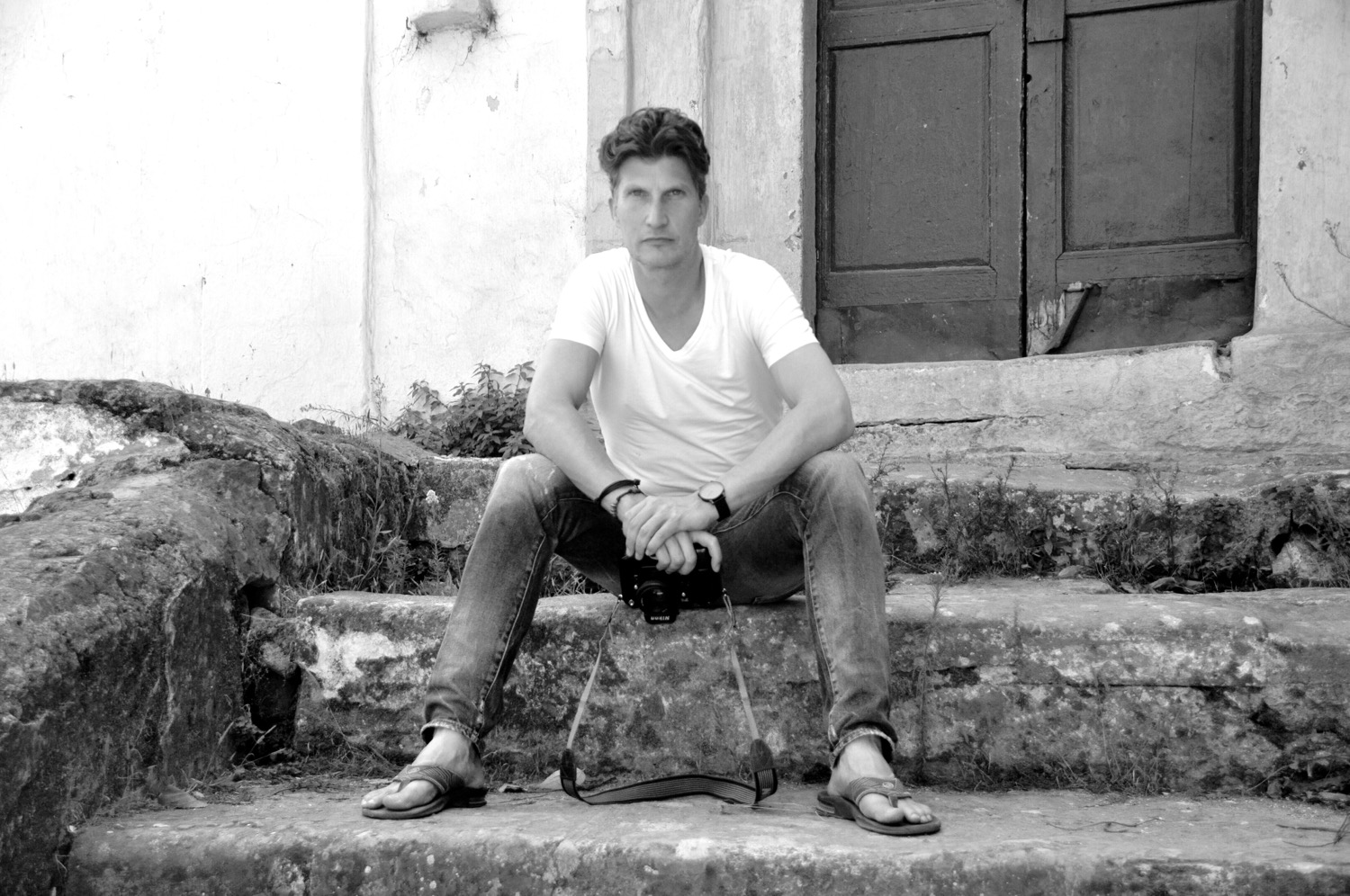
In issue #96 of Maritiem Courant, I am introduced in an interview by Matthijs Daniels as the new columnist for the Maritiem Courant.

You can read the article on Maritiem Courant or as a blog post below.
Poul van den Elshout is 51 years old and lives with his partner in Breda. He graduated summa cum laude from the Design Academy in Eindhoven in 1997 with a new concept for a container terminal on the Maasvlakte. He immediately started as an independent entrepreneur, sold his companies in 2015, and continued as a consultant in his firm Olderwoord. Since last year, he has further specialized as an innovation consultant for inland shipping, for which he self-published a vision document for inland shipping for 2035-2050. As of this month, he is also one of the columnists for the Maritiem Courant.
Did you grow up with river water in your veins?
I was born in Dordrecht in 1975 as the son of skippers. My parents sailed on the Hendor, a long barge from 1938. In 1980, they bought the Epsilon, with which we generally transported animal feed from Germany to Stuttgart. In 1981, I went to boarding school in Huijbergen. This was not a boarding school for barge operators because my parents did not want me to automatically become a barge operator. In 1994, my father had a serious accident, which meant I was on the verge of (temporarily) taking over the reins, but my parents did not want that. We decided by mutual agreement that I would finish my studies at the Design Academy.
We must not only prevent losing volume, but above all become so attractive that we attract volume; with new concepts, cleaner vessels, greater accessibility, and a good price.
Earlier this year, you presented a vision for the future of inland shipping, on the road to 2035 and 2050. How was that received?
The response to that was very positive. What I mainly received back is that it was received as a very comprehensive document with a broad approach covering all aspects of the industry, and that people were surprised by the depth of the various scenarios regarding topics such as the energy transition, autonomy, digitalization, staff shortages, fleet diversity, and capacity issues at shippers. I have initiated projects at various companies for research and the rollout of new propositions or strategies.
What is the most important/most surprising insight you personally gained while drafting the document?
The steps taken in recent years show that inland shipping is not nearly as conservative as most people say. The potential we can move towards as an industry is enormously impressive, provided we make the right choices. What did shock me, however, is the fleet diversity. The government pays too little attention to this, while shippers and receivers are increasingly finding themselves in a bind. This creates a negative model split, which will adversely affect the accessibility and resilience of the Netherlands. With the right attention, effort, and organization, we should be able to turn the tide.
How good is life in the Brabant countryside?
I live very relaxed in Breda and live there in a beautiful house with my girlfriend. We both love good food, but you won't catch me with a horn in the city during Carnival. In that regard, we could just as easily have lived in a beautiful house in Dordrecht or Rotterdam, but we fell in love with our current house on Baronielaan, one of the most beautiful streets in Breda.
What is the most beautiful place you have ever been? And where would you like to go again?
There are many places I like to think back on. I lived in Japan for six months when I was 19, and I have good memories of that. The culture is amazing and the people are very special. When I was there, the cherry blossoms were in bloom; that is very special to experience. During my travels, I like to photograph with my analog cameras, so with rolls and film. That ensures that you look much more closely before you take a photo. As a result, you experience the surroundings differently.
How established will the abbreviation LOHC be in inland shipping in a few years?
I expect that the hydrogen carrier LOHC will become increasingly established in the coming years, but that it will take five to ten years before we can actually use it. There is still an enormous amount of work to be done. The chance of it becoming a success is therefore very difficult to estimate.
What are the best purchase and the biggest mispurchase you have ever made?
Years ago, I bought an analog camera in Japan (Nikon FM2n) with which I still photograph with great love. It is really about taking the photo, not the photo itself. The sound and weight of the camera are amazing. What really puts me off are products that don't do what they promise. For example, I once bought a tripod for far too little money that couldn't properly support a camera without its legs collapsing.
Which piece of news will you never forget where you were and what you were doing when you heard about it?
The introduction of the iPhone in 2007 had a major impact on me. A whole new world opened up for me. I find the way you can interact with such a small device fascinating; no keyboard, pinching photos. As a designer and concept developer, those have been landmarks. I vividly remember buying my first iPhone after that and immediately having that familiar feeling of how to use it. I will never forget that.
The modal shift: is it going to happen or not?
To achieve this, a number of entrepreneurs need to make challenging decisions. If we want freight to go by water, there must be entrepreneurs who decide not to transport consignments by truck from now on. They make their choice based on costs, but also on security of supply, continuity, availability, and resilience. As inland shipping, we must not only prevent losing volume, but above all become so attractive that we attract volume; with new concepts, cleaner vessels, greater accessibility, and a good price. Inland shipping must be visible; people and businesses need to know what we do and how well we do it. There is much to be gained there, not only for our own industry but for the whole of the Netherlands and Europe.


Comments